The Exact Words That Kill the Vibe (And the Ones That Double It) — A Room-by-Room Breakdown
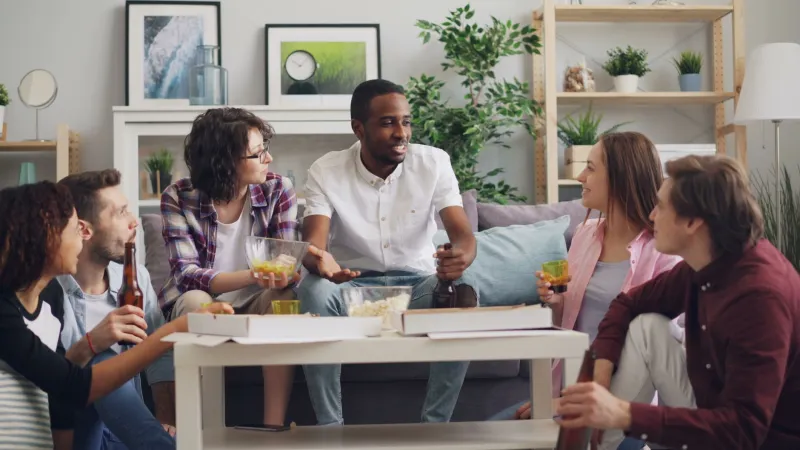
Somewhere between the pregame and the actual event, someone says something and the whole room shifts. You feel it before you can name it. The energy either climbs or craters, and everyone kind of recalibrates around the new frequency without acknowledging it out loud. It just... happens.
Except it doesn't just happen. There are patterns here. Specific phrases, specific silences, specific micro-moves that either amplify a room's energy or quietly drain it. And once you learn to spot them, you'll start noticing them everywhere — at dinner parties, in work meetings, at family gatherings, during road trips. Everywhere.
Let's break it down.
The Science Behind Why Certain Words Land Like a Grenade
Before we get into the actual phrases, a quick note on why this works the way it does. Social psychologists have documented something called emotional contagion — the phenomenon where people unconsciously mirror the emotional states of those around them. Your mood is literally transferable through language, tone, and body language. You are, in the most literal sense, affecting the emotional chemistry of every room you enter.
This means that vibe-killing and vibe-multiplying aren't personality traits. They're behaviors. Learnable, adjustable, observable behaviors. Good news for everyone who's ever wanted to be the person who elevates a room rather than accidentally deflates one.
Classic Vibe Killers (And Why They Work So Well at Being Terrible)
Let's start with the dark side, because recognition is the first step.
"That's not really how it works." This one arrives most often when someone is enthusiastically explaining something — a plan, an idea, a story — and it functions like a conversational speed bump. The problem isn't accuracy. Sometimes it's not really how it works. The problem is timing. Deploying a correction in the middle of someone's energized moment signals that being right is more important than being present. The room doesn't just pause — it slightly reorganizes around the person who got corrected.
"I'm just being honest." Always preceded by something that didn't need to be said out loud. This phrase is the verbal equivalent of 'no offense, but' — it's a disclaimer that announces the speaker knows what's coming is unwelcome but has decided to say it anyway. In group settings, it creates a low-level tension that lingers well past the original comment.
The unsolicited comparison kill-shot. Someone says, 'This is the best pizza I've ever had,' and someone else responds, 'Have you tried [other place]? This doesn't even compare.' Technically fine. Socially, a small joy was offered and declined. These micro-moments add up over the course of an evening.
The strategic phone check. Not a phrase at all — just the act of visibly pulling out your phone during someone's story. It's a silence that communicates more than most sentences. The room notices. The storyteller notices. The energy adjusts downward.
The Vibe Multipliers: Specific, Learnable, Genuinely Powerful
Now for the moves that actually work. And not in a forced, 'be more positive' way — these are precise language patterns that people who consistently elevate rooms actually use.
The callback. This is one of the most underrated social skills in existence. It's simple: you remember something someone said earlier in the night and bring it back at the right moment. 'Wait, didn't you say earlier that you've never had a good experience at a concert? Because what you just described sounds like the best night of your life.' The person who dropped that detail hours ago feels seen. The room feels like a cohesive experience rather than a series of disconnected conversations.
The genuine 'tell me more.' Not the polite 'oh interesting' that signals you're already thinking about what you're going to say next. The actual, leaned-in 'wait, how did that happen?' This works because most people are walking around with stories they've never been invited to fully tell. Being the person who issues that invitation is quietly unforgettable.
The enthusiastic agreement upgrade. Someone makes a decent point and instead of 'yeah, totally,' you say 'okay, that's actually a really good point because—' and you build on it. You're not just agreeing, you're amplifying. The original idea gets bigger. The person who said it feels validated. The conversation goes somewhere new. This is the vibe multiplier equivalent of a perfect assist.
Naming the good thing out loud. 'I just want to say — this is a really good hang.' It sounds almost too simple. But explicitly acknowledging when something feels good creates a shared moment of recognition that actually deepens the feeling. It's the verbal equivalent of pressing save on a memory while it's still happening.
The Silence Spectrum: Not All Quiet Is Created Equal
Some silences kill the vibe. Some silences are the vibe.
The silence after someone shares something vulnerable and nobody immediately jumps to fill it with advice or deflection? That's a vibe multiplier. It signals that what was said was worth sitting with. The room gets warmer.
The silence where someone finishes a story and there's a half-second pause before the next person starts talking about themselves? That's a vibe killer. It communicates that the story was a waiting period rather than a contribution.
The difference between these two silences is entirely about what comes after — and what comes after is a choice.
Putting It Together: The Room You Actually Want to Be In
The people who consistently create great energy in group settings aren't performing positivity. They're not louder or funnier or more charismatic than everyone else. They're paying attention in a specific way — to what people need to feel seen, to when energy is building and how to help it along, to the small moments that can either land or get wasted.
It's a skill. It's learnable. And the next time you're in a room and you feel the energy shift — in either direction — you'll know exactly what just happened.
Now you can choose what happens next.