Why Certain Rooms Make You Never Want to Leave (And Others Have You Plotting Your Escape After 10 Minutes)
You know the feeling. You step into someone's living room, a bar, a coffee shop — somewhere — and within about thirty seconds your brain goes, yes, this, stay here forever. You sink into a seat. You stop checking your phone. Time gets a little slippery. Suddenly it's 1 AM and nobody has moved in two hours.
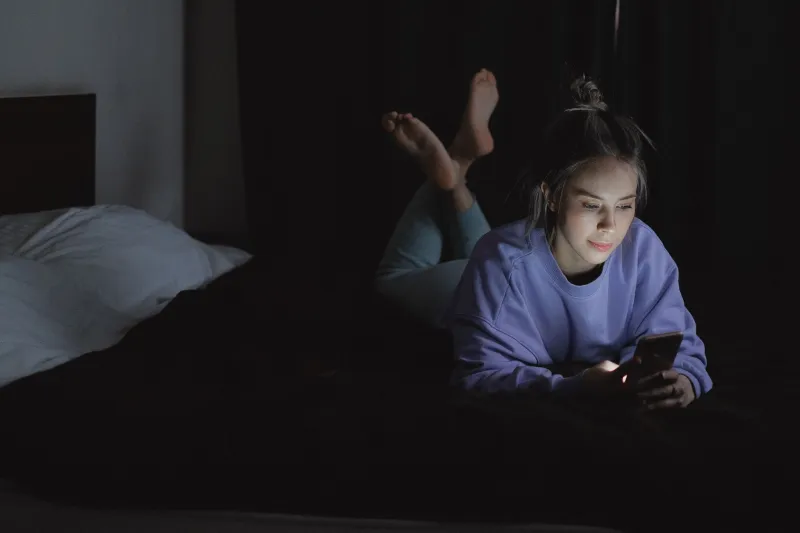
Then there's the other kind of place. The one where the vibe is... off. You can't fully explain it. The music isn't terrible. The drinks are fine. And yet every fifteen minutes you're glancing at the door like you're waiting for a parole officer to wave you through.
Here's the thing: neither of those reactions is random. Your body is running a full environmental scan the second you cross a threshold — and the results come back fast. Let's break down exactly what's happening, why it matters, and what you can actually do about it.
Your Brain Is a Vibe Detector (And It's Really Good at Its Job)
Behavioral psychologist Dr. Sally Augustin, author of Place Advantage, has spent years studying how physical environments shape our mood, behavior, and social energy. The short version? Spaces talk to us constantly, and we respond whether we realize it or not.
"Humans evolved to read environments for safety and resource cues," she explains. "When a space signals comfort and belonging, we relax. When it signals threat or disorientation — even subtly — we stay on alert."
That low-grade anxiety you feel in certain restaurants or office lobbies? That's your nervous system doing its job. It's just that nobody told the interior designer.
Let There Be (The Right Kind of) Light
Lighting might be the single most underrated factor in whether a space feels like a warm hug or a DMV waiting room. And the difference isn't just about brightness — it's about warmth, direction, and intention.
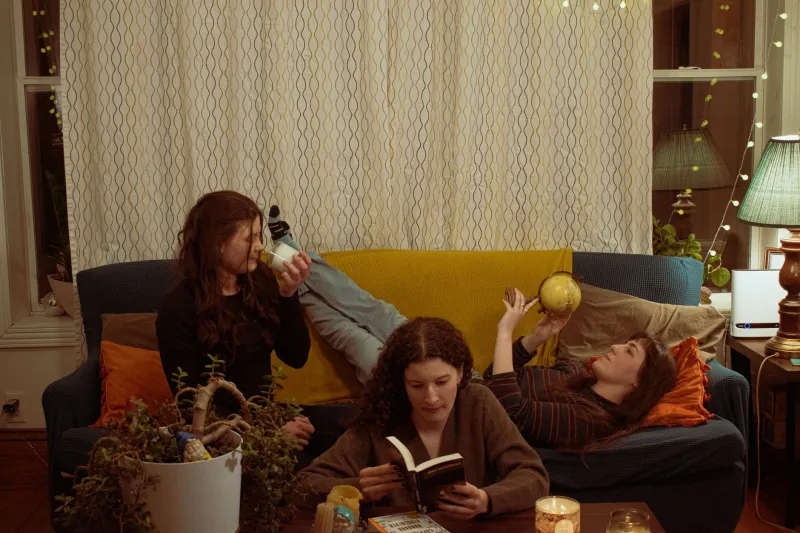
Harsh overhead fluorescents? Your brain reads those as "functional zone" — a place to get stuff done and leave. Warm, low, layered lighting — think table lamps, candles, Edison bulbs — signals "this is a place to settle in."
Interior designer Jasmine Toliver, who has designed spaces for boutique hotels and private clients across New York and LA, puts it bluntly: "Bad lighting is the number one silent killer of a good hangout. I don't care how beautiful your furniture is. If your overhead light is making everyone look like they're being interrogated, nobody's relaxing."
Her fix: ditch the overhead switch entirely when hosting. Use at least three light sources at varying heights, keep bulbs in the 2700-3000 Kelvin range (warm white, not that bluish daylight stuff), and let dimmer switches become your best friends.
Sound: The Invisible Architect
Have you ever been in a restaurant where you somehow had to shout to have a conversation, and yet the music wasn't even that loud? That's an acoustics problem. Hard surfaces — concrete floors, bare walls, high ceilings without treatment — bounce sound around like a pinball machine. The result is a room that feels chaotic and exhausting even at moderate volume.
Conversely, spaces with soft furnishings, rugs, curtains, and wall art absorb sound and create what designers call "acoustic intimacy." You can actually hear the person across from you. That ease of conversation is a massive, underrated driver of why some spaces feel social and others feel like a chore.
For music specifically, research from the Journal of Consumer Research found that moderate tempo, low-to-medium volume background music encourages people to linger and spend more time in a space. Too loud and people retreat inward. Too quiet and the silence feels loaded. The sweet spot is music that you notice but don't have to compete with.
Temperature Is Not a Neutral Variable
This one sounds almost too obvious, but it's wildly overlooked: cold rooms make people leave. Not in a dramatic way — nobody storms out because the AC is cranked — but studies consistently show that people rate social experiences more negatively in cooler environments and more positively in warmer ones. There's even research suggesting that physically warm spaces make people perceive other people as warmer and more trustworthy.
The ideal social temperature sits around 70-72°F. Anything significantly below that and your guests are subtly, unconsciously uncomfortable. They may not know why. They'll just find themselves wrapping up conversations a little faster.
Furniture Arrangement: The Secret Social Architecture
Here's something that'll make you look at every room you've ever been in differently: furniture placement literally controls how much people talk to each other.
Seating arranged in a circle or loose cluster encourages conversation. Seating arranged in rows — like a waiting room or a bad house party where all the chairs got pushed against the walls — kills it. Sociologist Edward T. Hall coined the term "sociofugal" for arrangements that push people apart and "sociopetal" for ones that draw them together. Your couch layout is social engineering, whether you meant it to be or not.
Toliver's rule of thumb: "Never let a coffee table become a barrier. You want people close enough to lean in, not shouting across a glass obstacle course."
The Scent Factor (Yes, Really)
Okay, this one sounds a little woo-woo, but bear with us. Scent is the only sense with a direct neurological pathway to the brain's limbic system — the part that handles emotion and memory. Which means smell hits different, literally, on a biological level.
Spaces that smell pleasant and familiar (think: light vanilla, citrus, clean linen, fresh coffee) trigger positive emotional associations almost instantly. Spaces that smell like nothing, or worse, like artificial air freshener trying to cover something up, create a subtle unease that people can't quite name.
You don't need to become a candle hoarder. A lightly scented candle, a diffuser with a simple warm scent, or just good ventilation and fresh air does the job. The goal is neutral-to-pleasant, not "walked into a Yankee Candle store."
So How Do You Actually Use This?
Whether you're trying to upgrade your own hosting game or just figure out why your favorite dive bar hits different every single time, here's the quick-hit checklist:
- Layer your lighting. Multiple warm light sources, no harsh overhead fluorescents when vibes are the goal.
- Add soft surfaces. Rugs, throw pillows, curtains — they're not just aesthetic, they're acoustic.
- Check the temperature. 70-72°F is the social sweet spot. Don't let your guests freeze.
- Rearrange the furniture. Pull seating into clusters. Remove barriers. Make it easy to lean in.
- Mind the scent. Subtle and warm beats nothing or overwhelming every time.
- Control the soundtrack. Moderate tempo, conversational volume, music that sets a mood without demanding attention.
The spaces that make you want to stay aren't magic. They're just well-calibrated. And now that you know what they're calibrating for, you can stop wandering into purgatory parties and start engineering the kind of hangouts where nobody wants to be the first to leave.
Your future guests will thank you. Probably by never going home. You've been warned.